Hexagonal Monogram Display Font for Editorial Elegance
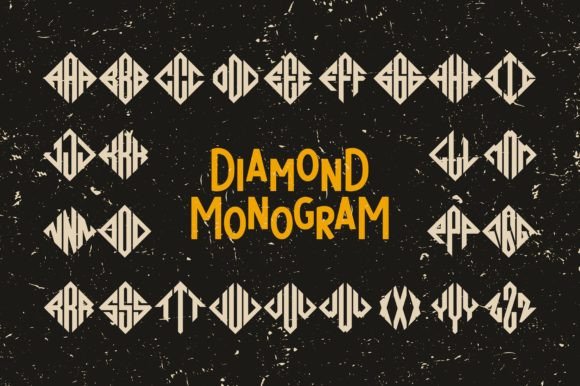
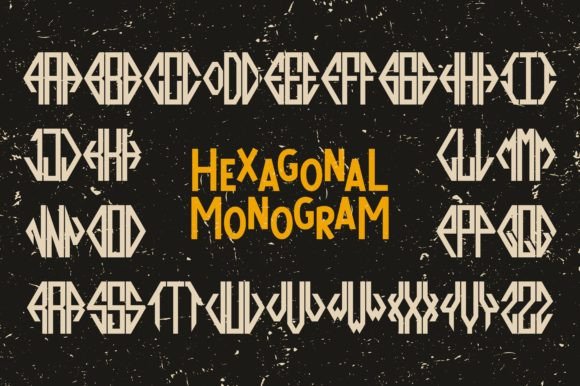
Hexagonal Monogram is a unique and charming display font — one that bridges craftsmanship and clarity in editorial design. Its defining trait is the distinctive way it renders three-word calligraphy: each word nestles into a hexagonal frame, creating rhythmic symmetry without sacrificing personality. As a display font, Hexagonal Monogram isn’t built for body text — it’s designed to anchor attention, signal intention, and elevate tone. Whether you’re crafting a digital magazine cover, styling a printable wellness guide, or designing a boutique newsletter header, Hexagonal Monogram delivers visual authority with quiet confidence.
Hexagonal Monogram for Magazine Covers and Print-First Editorial Design
Hexagonal Monogram shines where first impressions matter most: magazine covers, annual reports, and limited-run print publications. Its geometric structure gives weight and precision to headlines while retaining warmth — ideal for lifestyle, culture, or slow-living titles that value both sophistication and approachability. Because Hexagonal Monogram is PUA encoded, you can access alternate glyphs and stylistic sets directly in Adobe InDesign, Affinity Publisher, or even modern web editors — no workarounds needed. That means consistent, intentional typography across print PDFs, high-res exports, and physical press runs. For editorial designers who balance typographic nuance with production practicality, Hexagonal Monogram offers rare reliability among display fonts.
Hexagonal Monogram for Ebook Titles and Chapter Openers
When readers open an ebook, the title page and chapter headers set the emotional temperature. Hexagonal Monogram for ebook titles adds gravitas without stiffness — its three-word calligraphy format works beautifully for author-byline combinations (“Emma Reed • Storyteller • 2024”) or thematic triads (“Clarity • Courage • Craft”). As a display font, it’s optimized for screen readability at larger sizes: clean edges, balanced spacing, and strong contrast ensure legibility on tablets and e-readers. Pair Hexagonal Monogram with a warm serif font like Merriweather or a neutral sans serif like Inter for body copy — and you’ve built a hierarchy that guides readers effortlessly from cover to conclusion.
Hexagonal Monogram for Newsletter Headers and Digital Branding
For newsletter creators building a recognizable voice across issues, Hexagonal Monogram functions as both headline tool and brand signature. Use it consistently for your “Featured This Week” banner, “Reader Spotlight” intro, or seasonal campaign headers (e.g., “Summer • Slow • Stories”). Because Hexagonal Monogram is PUA encoded, you’ll retain full control over glyph substitution when exporting HTML emails or embedding in Mailchimp or Beehiiv templates. It’s not just decorative — it’s functional branding. When your audience sees that hexagonal rhythm repeated across issues, they begin to associate it with your editorial voice: thoughtful, intentional, unhurried.
Hexagonal Monogram for Printable Guides and Lead Magnets
Creative professionals — from coaches to recipe developers — rely on printable lead magnets to convert readers into clients. Hexagonal Monogram brings instant polish to worksheets, reflection journals, and planning tools. Imagine a “Goal Setting Triad” worksheet titled with Hexagonal Monogram (“Vision • Action • Review”) — the shape reinforces the concept, while the font’s charm builds trust before the first line is read. As a display font, it prints crisply at 300+ DPI and scales cleanly across A4, US Letter, and digital PDF formats. Just confirm your license includes commercial use for downloadable assets — Hexagonal Monogram supports standard commercial licensing for ebooks, templates, and paid newsletters.
Hexagonal Monogram for Quote Graphics and Social Media Teasers
In content marketing, quote graphics stop scrollers — but only if they feel authentic, not generic. Hexagonal Monogram’s three-word calligraphy makes it uniquely suited for concise, resonant statements: “Breathe • Listen • Begin”, “Kindness • Consistency • Growth”. Unlike ornate script fonts that sacrifice legibility, Hexagonal Monogram balances flourish with function — every letterform remains distinct, even at smaller sizes on Instagram or Pinterest. Use it sparingly: once per graphic, centered, with generous whitespace. Then pair with a light-weight sans serif caption (like Lato or Manrope) to maintain balance. Among display fonts, few offer this level of tonal control for social-first storytelling.
Hexagonal Monogram for Wedding Invitations and Elegant Branding
Hexagonal Monogram’s geometry echoes classic monogram traditions — but with contemporary restraint. That makes it ideal for wedding stationery, luxury brand launches, or artisanal product packaging where heritage meets minimalism. Its PUA encoding ensures seamless integration into Canva, Illustrator, or Procreate workflows — critical when designing layered invitation suites or branded merch. As a display font, it avoids the fragility of delicate scripts while offering more character than rigid geometric sans serifs. For editorial designers extending a client’s voice into physical touchpoints, Hexagonal Monogram becomes a bridge between digital presence and tactile experience.
Hexagonal Monogram Font Pairing for Editorial Layouts
A display font like Hexagonal Monogram earns its place by contrast — not isolation. In editorial layouts, it pairs most effectively with highly readable serifs (e.g., EB Garamond, Crimson Text) for long-form body copy, or with airy, low-contrast sans serifs (e.g., IBM Plex Sans, Nunito) for captions, pull quotes, and navigation labels. Avoid pairing with other display fonts or heavy scripts — Hexagonal Monogram needs breathing room to resonate. Test spacing rigorously: its hexagonal framing benefits from extra line-height in headings and generous letter-spacing in all-caps applications. And always verify multilingual support if your audience spans English, Spanish, or French — Hexagonal Monogram’s PUA encoding helps future-proof those expansions.